
Predictably Irrational What Estate Agents Must Understand About Trust
Clients believe they choose agents logically. Predictably Irrational proves they do not. This blog explores how behavioural bias shapes pricing trust and decisions, and what estate agents can do to design certainty and win better instructions.

We like to believe people choose estate agents based on logic. That vendors compare evidence, review marketing, assess track records, and calmly select the best professional for the job. It is a reassuring belief. It is also wrong.
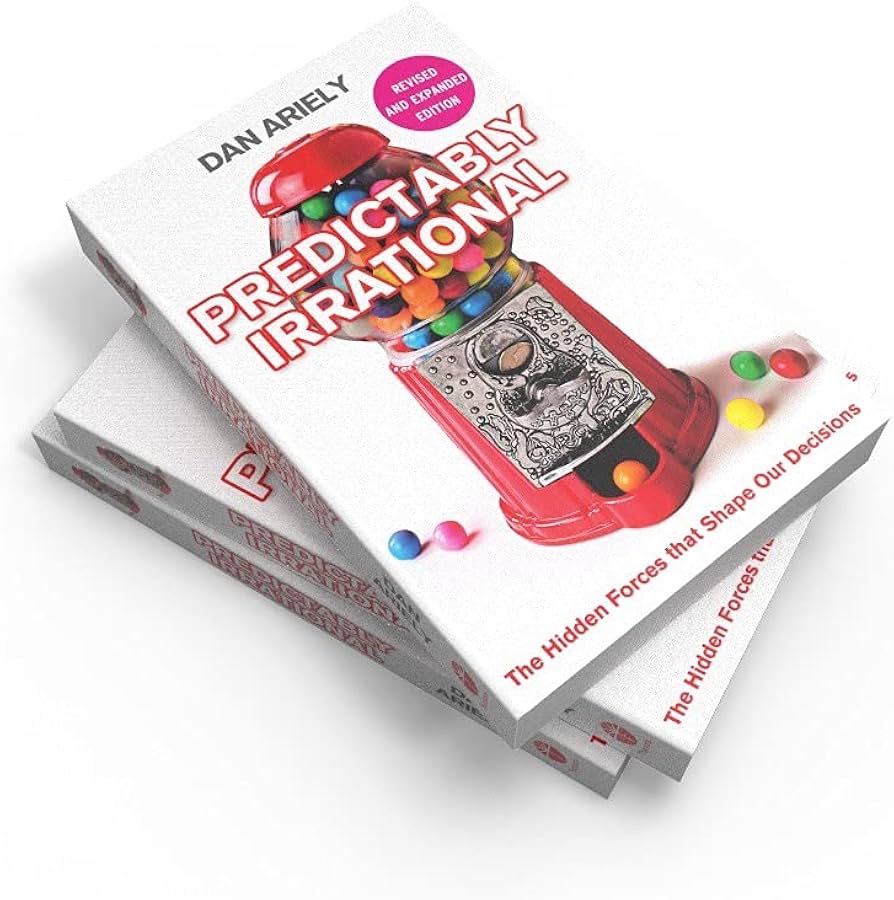
Dan Ariely’s Predictably Irrational exposes an uncomfortable truth. Humans do not behave rationally. They behave predictably irrationally, not because they are careless, but because the brain looks for shortcuts under uncertainty, and selling a home is nothing if not uncertain.
This matters more than most agents realise because your clients are not choosing the best agent on paper. They are choosing the agent who reduces uncertainty the fastest. Not the cheapest. Not the loudest. The one who makes the process feel safer.
Ariely’s research shows that people anchor to the first number they hear. They overvalue what feels familiar. They avoid loss more strongly than they chase gain. They make emotional decisions and then use logic to justify them after the fact. If that feels confronting, it should, because it explains why great agents still lose instructions.
Think about a valuation where you did everything right. You prepared the data. You showed the comparables. You explained the strategy clearly and professionally and still, you lost. Not because your logic was wrong, but because logic was never in charge of the decision.
The anchor had already been set, maybe by another agent, maybe by a neighbour or maybe by an online estimate seen months earlier. Once that anchor exists, everything else becomes a reaction to it. Ariely explains this clearly. The first reference point shapes the emotional frame, and emotion drives behaviour.
This is why the sequence of your conversation matters more than the quality of your presentation. Many agents ask vendors what price they want far too early, believing it shows collaboration. In reality, it hands away influence. Once a number exists, it becomes sticky, even when the evidence contradicts it.
The first number is not information. It is power.
The same principle applies to fees. When clients compare percentages in isolation, they default to what feels familiar rather than what delivers value. When they compare clarity of process, expectation setting, and risk management, they make better decisions. Predictably Irrational explains why data alone rarely wins. Humans struggle to judge value in isolation. We decide by comparison and narrative, not spreadsheets.
Statistics support decisions. Stories drive them.
Saying we sold twenty homes last year is logical. Saying let me tell you about a client who started exactly where you are now is human. One informs. The other builds trust.
Ariely also highlights loss aversion, something most agents avoid. People feel the pain of loss far more intensely than the pleasure of gain. Yet many agents shy away from difficult conversations. They promise upside and soften risks, avoid talking about overpricing, time on market, or buyer fatigue.
Elite agents do the opposite. They name the risk early and explain what can go wrong and how their process protects the client from it. They reduce fear by acknowledging it rather than pretending it does not exist.
Safety sells more than optimism.
This is not manipulation. It is leadership. Predictably Irrational is not about tricking people into decisions. It is about understanding how people actually behave so you can design clearer conversations, better experiences, and more honest frameworks.
This thinking applies beyond valuations. It applies to leadership and culture. Teams follow leaders who reduce uncertainty. Clients trust professionals who create clarity. Confidence is not volume. It is structure.
What You Can Take Away And Do In Your Business
This is where theory becomes useful.
Redesign the first five minutes of every valuation.
Stop opening with price questions. Start by framing the journey, the market conditions, the decision points, and the risks. Only then introduce price.
Replace one statistic with one story.
Choose a real client example you can tell naturally. Use it to show process and outcome, not to impress.
Name the risk you usually avoid.
Pick one uncomfortable truth and say it calmly and clearly. Show how your approach manages it.
Before your next instruction, audit where you assume logic is driving the decision when emotion is actually in control. Redesign that moment intentionally.
You are not selling homes.
You are designing certainty.